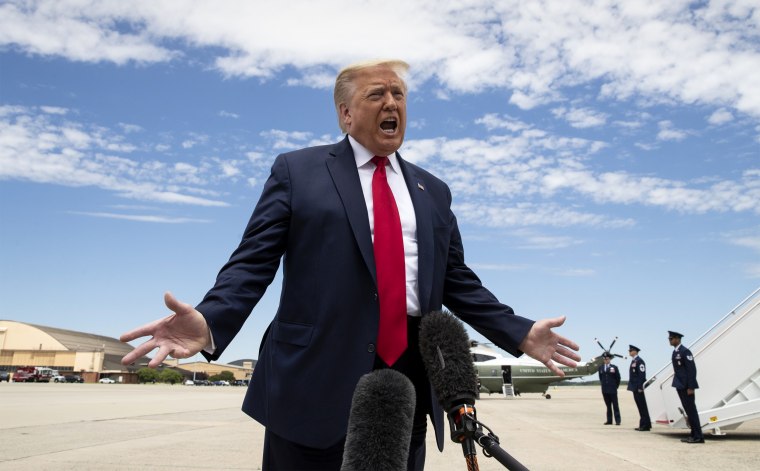
A new supercut compiling Donald Trump’s most incendiary insults has reignited debate over the role of personal attacks in American political discourse. As Republican leaders quietly urge Trump to temper his rhetoric, the video lays bare a decades-long pattern of degrading language targeting opponents, journalists, and even allies. What emerges isn’t just a compilation of offensive remarks—it’s a disturbing chronicle of how norm-breaking speech has become central to Trump’s political identity, testing the limits of party loyalty.
The Supercut That Forced a Party to Confront Its Dilemma
The supercut, edited and published by an independent media watchdog, spans over 15 years of Trump’s public statements—from reality TV fame to the White House and beyond. In just under nine minutes, it stitches together over 200 insults, each delivered in Trump’s signature cadence: dismissive, personalized, and often humiliating.
Examples include calling Senator Mitt Romney a “choke artist” and a “loser,” labeling CNN a “fake news network,” and dubbing former UN Ambassador Nikki Haley “U.N. Ambassador No. 2.” The video doesn’t add commentary—just the raw footage, one after another, creating a cumulative effect that’s difficult to ignore.
For casual observers, it’s jarring. For political strategists, it’s alarming. The timing couldn’t be worse for GOP leaders hoping to present a unified, electable front in the upcoming cycle. The supercut has been shared widely across platforms, amassing millions of views and drawing responses not just from Democrats but from traditionally silent Republicans.
What makes this supercut different from previous compilations is its focus: not policy failures or legal troubles, but the tone of Trump’s communication. It strips away political framing and exposes something more visceral—the constant stream of belittlement that has long defined his approach.
Why the GOP Is Quietly Worried
While Trump remains the de facto leader of the Republican base, party officials are increasingly vocal—albeit off the record—about the damage his language inflicts on broader electoral prospects.
Private discussions among GOP operatives reveal concern that Trump’s rhetoric alienates suburban voters, women, and younger demographics critical in swing states. One Republican strategist, speaking anonymously, put it bluntly: “We can’t run a campaign where the nominee calls half the country ‘losers’ and ‘enemies of the people’ and expect to win by double digits.”
This isn’t new. After the 2020 election, internal party memos warned that Trump’s combative tone was eroding trust in democratic institutions and turning off independents. But with Trump leading early primary polls, few are willing to challenge him directly. Instead, the pushback comes in subtler forms—op-eds calling for “a more unifying tone,” endorsements of candidates who distance themselves from personal attacks, and carefully worded statements urging “respectful debate.”
The supercut amplifies these concerns by making the pattern undeniable. It’s one thing to dismiss a single insult as hyperbole; it’s another to hear dozens in rapid succession, revealing a deliberate strategy of delegitimization.
The Anatomy of a Trump Insult
What makes Trump’s insults so effective—politically, if not ethically? Linguistic analysis of the supercut reveals several recurring tactics:
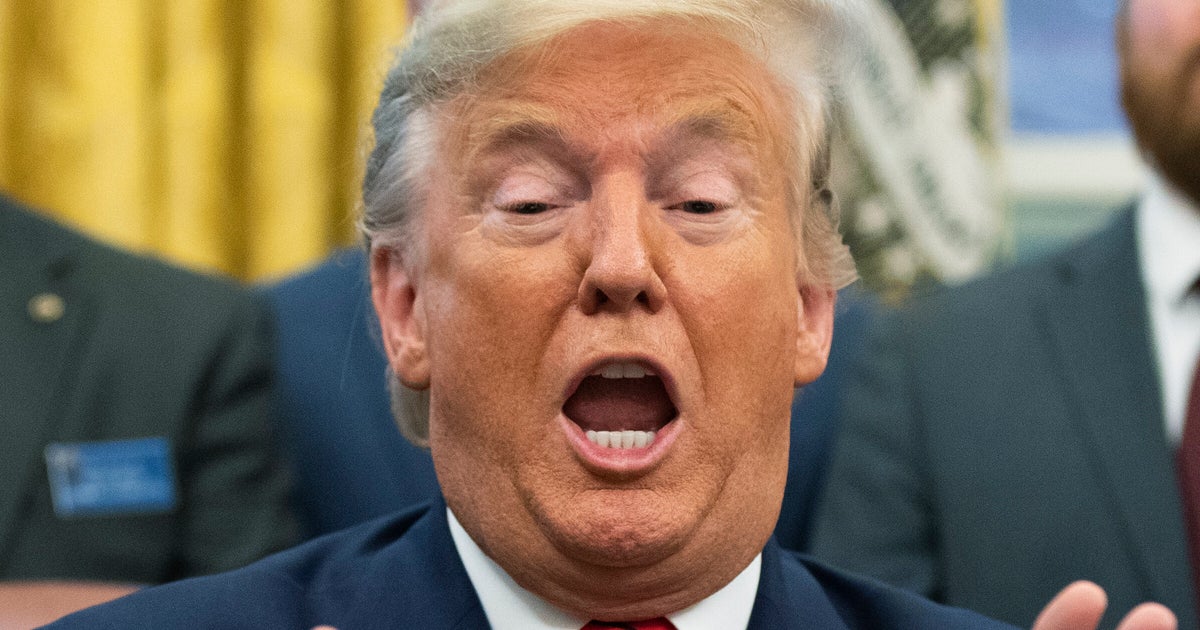
- Diminutive nicknames: “Sleepy Joe,” “Little Marco,” “Crooked Hillary”—these reductive labels stick in public memory and flatten complex figures into caricatures.
- Physical and mental degradation: Remarks like “she’s not a 10” or “he’s mentally ill” cross from policy critique into personal humiliation.
- Weaponizing media platforms: By delivering insults on stages, rallies, and Twitter (now X), Trump ensures maximum visibility and media amplification.
- Blame-shifting through personal attack: When criticized, Trump rarely defends policy—he attacks the critic. The supercut shows this reflex in over 70% of clips.
This rhetorical playbook isn’t accidental. It’s a calculated method to dominate news cycles, energize the base, and frame all opposition as illegitimate. As one political psychologist noted, “The goal isn’t persuasion—it’s polarization. And it works.”
But it comes at a cost. Journalists report increased threats after being labeled “enemies of the people.” Elected officials on both sides say they’ve received harassment after being targeted in Trump’s speeches. The supercut doesn’t just highlight offensive language—it connects it to real-world consequences.
The Media’s Role in Amplifying the Rhetoric
One irony of the supercut is that it exists because of how media ecosystems reward outrage. For years, networks gave Trump free airtime because his rallies delivered ratings. Insults generated headlines; headlines drove clicks; clicks fueled ad revenue.
The supercut, in a way, is a mirror held up to the media. It uses the same clips that once filled 24-hour news cycles to ask: What did we enable?
Still, some outlets are changing course. Major networks now schedule fewer live rally broadcasts. Editors apply more context when quoting Trump’s remarks. And digital platforms have implemented policies—however inconsistently—to limit the spread of dehumanizing language.
Yet the damage may be done. The normalization of personal attacks has seeped into broader political culture. Candidates across the spectrum now adopt sharper tones, and voters increasingly expect confrontation over civility.
GOP Alternatives: Who’s Trying a Different Tone?
While Trump dominates headlines, a handful of Republican figures are attempting a different approach—emphasizing policy, unity, and respectful discourse. They’re not gaining the same traction, but their presence highlights a fissure within the party.
- Chris Sununu, former New Hampshire governor, avoided personal attacks even when criticizing Trump, focusing instead on governance and fiscal responsibility.
- Larry Hogan, ex-Maryland governor, built a bipartisan brand and openly condemned the “toxic” nature of modern political rhetoric.
- Nikki Haley, during her 2024 campaign, criticized Trump’s language as “not presidential,” though she later softened her tone under pressure.
These figures represent a minority view—one that struggles to gain traction in a media environment optimized for conflict. But the supercut has given them fresh ammunition. “We can’t keep letting the loudest voice set the standard,” Hogan said in a recent interview. “Leadership isn’t about name-calling. It’s about problem-solving.”
Their challenge is clear: How do you promote civility in a system that rewards outrage?
Can Rhetoric Be Contained—Or Is
It Here to Stay?
The deeper question the supercut forces us to confront is whether this style of politics is reversible. Can a party, or a country, step back from the brink of constant personal warfare?
History suggests it’s possible—but only with intention. After periods of intense polarization, such as the Reconstruction era or the 1960s civil rights battles, norms eventually reformed through leadership, institutional pressure, and cultural shifts.
But there’s no indication Trump plans to change. If anything, his recent speeches have grown more aggressive. And with a significant portion of the Republican base praising his “toughness,” there’s little incentive to moderate.
The GOP’s dilemma is structural. They rely on Trump’s popularity to win primaries but fear his rhetoric will cost them in general elections. The supercut crystallizes that tension, making it harder to ignore.
What the Public Sees—and What It Ignores
Not everyone views the supercut as a critique. For many Trump supporters, the insults are proof of authenticity. “He says what we’re thinking,” one rally attendee told a reporter. “Politicians have been lying to us for decades. He calls it like it is.”
This perception—of Trump as a truth-teller unafraid of backlash—is central to his appeal. To his base, the insults aren’t “vile”; they’re “fighting back.”
But research shows that repeated exposure to dehumanizing language has psychological and social effects. Studies from the University of Pennsylvania found that audiences exposed to sustained personal attacks are more likely to view political opponents as threats, not rivals. That mindset fuels extremism, disengagement, and even violence.
The supercut doesn’t argue this directly. It simply presents the evidence. And in doing so, it shifts the burden: not on whether Trump insults people—he clearly does—but on what we, as a political culture, choose to do about it.
A Closing Challenge: Leadership Beyond the Soundbite
The Trump supercut isn’t just about one man’s words. It’s about what those words reveal about American politics: our appetite for spectacle, our tolerance for degradation, and our willingness to confuse bluster with strength.
For the GOP, the path forward isn’t simple. They can’t disown Trump without risking rebellion. But they also can’t fully embrace his rhetoric without sacrificing broader appeal.
The solution won’t come from another compilation video or op-ed. It will come from leaders—within the party and beyond—who are willing to model a different kind of discourse. One that doesn’t rely on humiliation, but on argument. One that doesn’t pit Americans against each other, but invites them into dialogue.
The supercut ends with silence. No final message. No call to action. Just the echo of years of insults hanging in the air. What follows is up to us.
FAQ
What is the Trump supercut? A viral video compiling decades of Donald Trump’s most offensive personal insults, highlighting a pattern of degrading rhetoric toward political figures, media, and critics.
Why are Republicans concerned about Trump’s language? Many GOP strategists believe his insults alienate moderate voters, women, and suburban demographics crucial in swing states, hurting the party’s chances in general elections.
Does the supercut include context for the insults? No—the video presents the insults in rapid succession without commentary, aiming to show the cumulative effect of Trump’s rhetoric.
Have other politicians used similar language? While personal attacks aren’t unique to Trump, the frequency, intensity, and public nature of his insults are historically unprecedented for a major party figure.
Is the supercut biased? The compilation is selective by nature, but the clips are authentic and sourced from public appearances, interviews, and social media.
What impact has the supercut had? It’s sparked renewed debate within the GOP about tone, been widely shared across social media, and cited in editorials calling for more civil political discourse.
Can political rhetoric really change? Yes, but it requires institutional will, media responsibility, and leadership that prioritizes unity over division. The supercut makes clear how far we’ve drifted—and how hard the climb back may be.
FAQ
What should you look for in Trump Supercut Reveals Pattern of Vile Insults Under GOP Pressure? Focus on relevance, practical value, and how well the solution matches real user intent.
Is Trump Supercut Reveals Pattern of Vile Insults Under GOP Pressure suitable for beginners? That depends on the workflow, but a clear step-by-step approach usually makes it easier to start.
How do you compare options around Trump Supercut Reveals Pattern of Vile Insults Under GOP Pressure? Compare features, trust signals, limitations, pricing, and ease of implementation.
What mistakes should you avoid? Avoid generic choices, weak validation, and decisions based only on marketing claims.
What is the next best step? Shortlist the most relevant options, validate them quickly, and refine from real-world results.